Women-Owned, Women-Run: How the Pérez Sisters Built a Badass Machine Shop
Women in the Trades
Women-Owned, Women-Run: How the Pérez Sisters Built a Badass Machine Shop
Nubia and Nancy Pérez are running their family’s Houston machine shop their way — in their Xena boots.
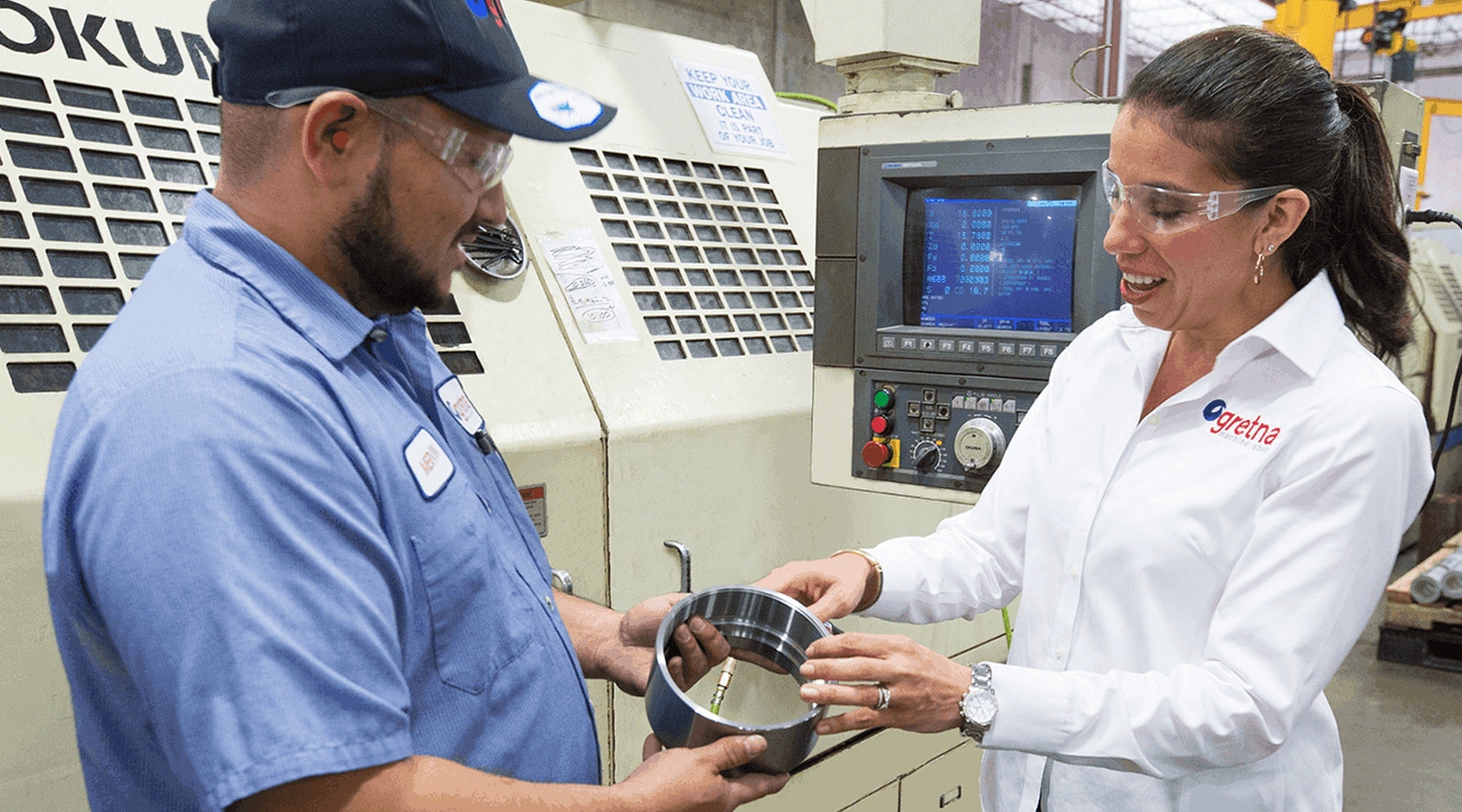
Who runs Gretna Machine Shop? Sisters Nubia and Nancy Pérez run it alongside their mother, Ninfa Pérez — making it one of the few women-owned, women-run machine shops in Houston, Texas. “It’s not just women owned, it’s women run,” says Nancy. And they’re doing it unapologetically: building a welcoming culture, investing heavily in manufacturing workforce development, and carrying on their family’s legacy — all while raising their kids.


The company, Gretna Machine Shop, was founded by Ninfa and her husband, Jose Benjamin Pérez, in 1980. In 2012, when their father became ill, Nubia and Nancy decided to come home and work for the family. Neither sister had planned on it — in fact, both told their father “no” many times. They were deeply invested in their own careers: Nancy ran a marketing agency, while Nubia worked in environmental commodities in the energy sector.
After their father passed, Nubia came on full time and in 2023 took over as CEO. Nancy is now Head of Strategic Partnerships, while their mother specializes in accounting, finance, and negotiations. “Neither of us were planning to be a part of it,” says Nubia, “but we couldn’t be happier.”
The Business
What does Gretna Machine Shop make — and what changed under their leadership?
“We’re predominantly in the energy, aerospace, and defense industries, and we primarily manufacture metal components,” says Nubia. Gretna is a job shop — they don’t make their own products, they manufacture parts for customers — and roughly 70 percent of the business is turnkey.
Since the sisters took over, the company has clear goals, vision, and direction. But the transition wasn’t easy. Their father held the institutional knowledge of the shop and didn’t have enough time to pass it on. At first, Nubia and Nancy spent a lot of energy trying to fill his shoes — and it wasn’t working the way they hoped.
Eventually, they started doing things their way. They built a core set of company values and reshaped the culture around transparency, openness, accountability, and respect. As a women-run shop, they run it a little differently than most: competitive pay, strong benefits, and regular training on communication, conflict resolution, mental health, and leadership. They believe in building a sustainable workplace and actually listening to feedback.
are held by women
roles go to women
Source: Women in Manufacturing™ industry benchmark. Nubia and Nancy are part of that 26% — and growing it.

Building the Workforce
How do you bring new people into manufacturing — and lift up those already in it?
One of Gretna’s biggest goals is to become a major manufacturing center in Texas and grow beyond Houston. Texas is one of the fastest-growing states for manufacturing, especially with the influx of aerospace companies. But much of the existing talent is nearing retirement, so bringing in younger people is critical.
“We’re heavily involved with workforce development in our community and bringing manufacturing back into Houston,” says Nancy. Externally, Nubia speaks on panels and at conferences, championing the industry — “We’re actively talking about how awesome manufacturing is,” says Nancy, “while we’re wearing our Xena shoes.”
They’ve partnered with Capital IDEA Houston, which won a major Department of Labor grant for manufacturing workforce development, and are helping promote its September gala. Internally, they’re building leadership pathways, training on the latest technologies, working with nonprofits to find new talent, and developing an apprenticeship curriculum alongside other shops through the National Tooling & Machining Association.
“We’re a machine shop first and foremost,” says Nubia, “but we also want to serve as a conduit for future generations.”

Work & Family
How do you balance running a company with raising a family?
“When we’re with our families, with our kids, we’re present, we have boundaries, and we put our phones away,” says Nancy. For both sisters, work-life balance is non-negotiable: family first, and work stays at work. At the same time, they’re passing on the family work ethic. “I think we had a great teacher — our mother,” says Nancy. “She did drop-offs and pick-ups, and somehow, in between, she worked.”
Motherhood has shaped how they lead. “Being a mom is the best thing that happened to me in my career. So much of what I’ve learned as a mom, I’ve implemented at the company,” says Nubia — patience, conflict resolution, thinking on the fly, and finding the end goal even when no one agrees (like getting your kids in the car when their shoes don’t match). Nancy says motherhood taught her to slow down: “Let me evaluate the situation. Let me take a deep breath and control myself.” She’s learned to humble herself and to apologize when she’s wrong — whether to a child or an employee.
Dress for the Part
Does what you wear actually change how you work?
“Whether it’s the shoes, the clothes, or just the way you carry yourself, you feel the confidence through your outfit,” says Nancy. “I tend to dress up every day, at every meeting — it’s just who I am.”
“There’s the quote, ‘Dress for the part that you don’t have,’” says Nubia. “You dress that way even though you don’t have the role yet. It’s almost like a walking vision board.” She had that quote in mind before stepping into the CEO role — and now it’s even easier to dress the part in her Xena boots.
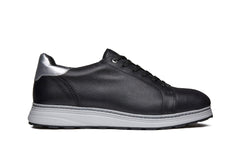
Nubia is constantly moving between meetings and the shop floor. Before Xena, she wore bulky lace-up steel-toed boots she had to change in and out of all day. “They were super ugly,” she says. Now she never changes her shoes — she wears her Gravity Safety Shoes in Sleek Black from meeting to machine, all day. “I love that my Xena boots have a heel. It’s nice to feel taller.”
“We’re amazing badass women. So we just own it.”— Nancy Pérez
Their Advice
What would you tell other women in the trades?
Nubia keeps it short: “Stay in it.” “Make it your own,” adds Nancy. “Unapologetically,” Nubia says, finishing her sister’s sentence.
“There are lots of male-dominated industries out there,” says Nancy, “and it can be easy to think we have to look like them or act like them. No — we are who we are, and we’re amazing badass women. So we just own it. It’s important we teach girls that you don’t have to look a certain way to be beautiful or be accepted. It all starts within us.”