
Built Different: How One Woman in Manufacturing Is Rewriting the Rules of Leadership

Women make up just 29% of the manufacturing workforce. Emily Honor Hubbard is one of them — and she's proving that empathy, not ego, is the most powerful tool on the shop floor.

Emily Honor Hubbard is a 29-year-old Spanish-bilingual consultant, continuous improvement strategist, and professional speaker. She is the founder of Empathic Engineering and always wears her Xenas on the job.
Walk into most manufacturing facilities as a young woman consultant, and you'll notice a few things fast. The noise. The smell of metal and oil. The way some people look at you — a quick sizing up — before returning to their work.
Emily notices all of it. And then she gets to work.
"Empathic engineering is about bringing the human side into continuous improvement," she says. "The 5S, Lean, and Kaizen tools work. But only if the people using them feel heard, understood, and respected. That's the part that's often missing."
29%
That's the share of women in the U.S. manufacturing workforce. Emily Honor Hubbard is working to change that number.
Source: Bureau of Labor Statistics / The Manufacturing Institute
The Origin Story
Where It Started: A Ford Mexico Meeting That Changed Everything

Emily at Ford Motor Company in Mexico, 2022 — where the idea for Empathic Engineering was born.
Before founding Empathic Engineering, Emily worked as a Design and Release Engineer at Ford Motor Company in Mexico, earning her Six Sigma Green Belt in the process, during the height of the COVID pandemic. She was young. She was American. And she was paying close attention.
In cross-border meetings between the design teams in Mexico and the US, she noticed a pattern. Native English speakers dominated — talking 80 to 90 percent of the time. The Mexican engineers, brilliant and experienced, were largely quiet.
Then one day, after a particularly long call ended without resolution, something shifted. The team hung up, switched to Spanish, and solved the problem in minutes.
"I wondered why they didn't say anything in the meeting," Emily says. "And then I realized, from my own experience learning Spanish, that we weren't giving them enough time. They needed time to translate the question, formulate a response, and translate their answer back. We just weren't leaving that space."
Nobody was being malicious. Nobody was trying to exclude anyone. The problem wasn't with the intention — it was the meeting design. The meeting wasn't built for everyone in the room.
"The meeting wasn't built for the majority of the team involved. That was the moment I understood what empathic engineering actually meant."
That moment planted the seed. If it could happen at Ford, it was happening everywhere.
The Philosophy
What Does Empathic Engineering Actually Mean on a Factory Floor?
Emily founded Empathic Engineering to serve manufacturing and technology companies with consulting, continuous improvement strategy, and leadership development. But her pitch isn't about frameworks or deliverables. It's about a gap she kept seeing: the workers closest to the problem almost always know the answer. They just haven't been asked.
"In every facility I walk into, there are people who have been watching the same inefficiency happen for months, sometimes years," she says. "They have ideas. They have solutions. But nobody has created the space for them to share it."
The hardest part of her job, she'll tell you, isn't the technical side. It's getting leadership to act on what workers say once they do speak up. This strategy helped one team save $70k in 3 days by applying her problem-solving framework to their rework process.
"The workers closest to the problem almost always know the answer. They just haven't been asked."

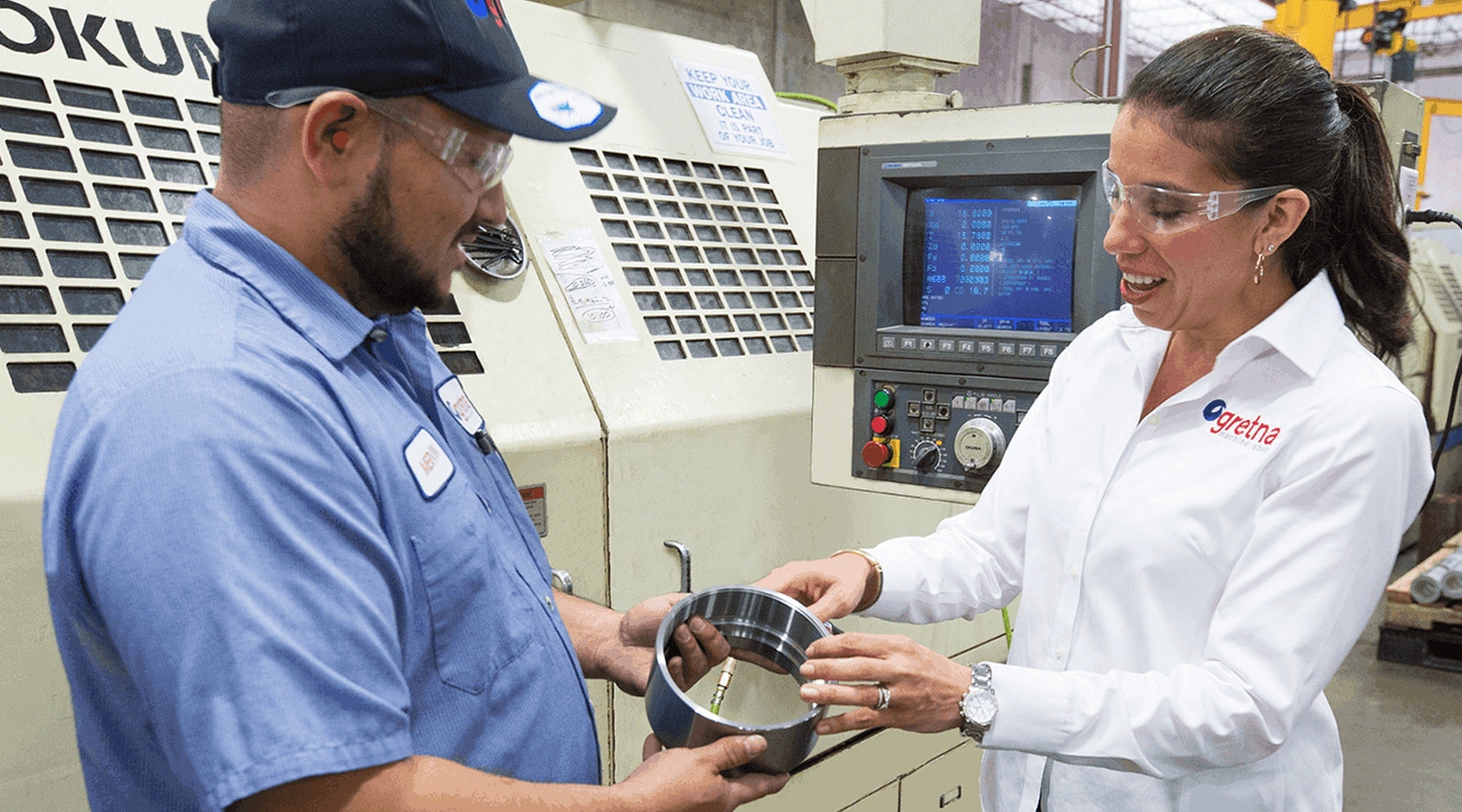
Emily on the manufacturing floor. She believes consulting happens at the machine, not behind a desk.
In the Field
When Two Languages Meet on the Manufacturing Floor
One of Emily's most memorable recent projects came through a partnership with The KPI Lab, working at Food for Health, a nonprofit food operation. One tool she was brought in to teach was 5S: the foundational lean methodology for sorting, organizing, and sustaining a clean, efficient workspace.
The team was bilingual — Spanish and English — and the dynamic in the room captured everything Emily believes about why empathy isn't optional in this work.
"One of the team leads had only been there four months and was still learning English," Emily says. "And yet she was already leading people, already solving problems. The motivation in that room was inspiring."


Teaching 5S with The KPI Lab at Food for Health — a bilingual team with incredible drive.
But she also saw the friction that comes when a team lead and an assembler don't share a native language. Standard continuous improvement tools like "5 Why" — a technique where you ask why a problem occurred five times to find its root cause — require nuance, relationship, and trust to work. When there's a language barrier, that trust is harder to build. Leaders sometimes stop reaching for their best tools because the communication feels too risky.
"That's the moment I find most meaningful," Emily says. "Not fixing it with a new process, but helping people find a way to connect so the process can actually work."
When the group moved into the first two S's — Sort and Set in Order — Emily did what she always does: she asked the workers (switching between both languages) where it was already happening, and where there were opportunities to improve. The answers came quickly. They always do.


In Her Boots
What It's Really Like Being a Woman in Manufacturing
Emily is 29. She is a woman. She often walks into facilities where neither of those things is common. She knows it.
"There's a moment when you walk onto a new floor where you feel the question in the room about whether you belong there," she says. "I've learned to let my work answer that question."
Part of how she does that is showing up prepared to get into it physically, not just intellectually. She's on the floor. She's at the machine. She's asking questions that require her to move, crouch, and stand for hours.
That's where her Xenas come in.

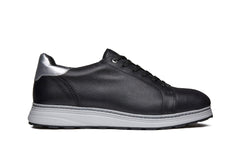
"These aren't safety shoes, are they?" — Yes. Yes, they are.
"I get it every time," she laughs. "'Those aren't safety shoes, are they?' And I love that moment. Because I get to say:
"Yes, these are the best safety shoes I've ever had. I'll never go back."
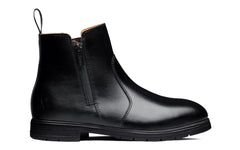
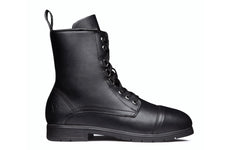
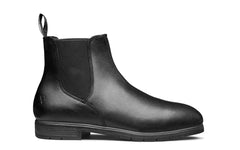
Before Xena, Emily wore shoes designed for men's feet. "I always had problems with my lower back," she says. "I didn't connect it to my footwear for a long time. When I finally found the Valence Steel Toe Xenas, everything changed. I can be on a plant floor all day and feel like myself — not like I borrowed someone else's gear."
That, she'll tell you, matters more than it sounds. When you feel comfortable and confident in what you're wearing, you show up differently. You move differently and ask better questions.

The best consulting happens when people feel safe enough to laugh.
Looking Forward
What the Next Generation of Women in Manufacturing Needs
Emily speaks professionally on empathy in manufacturing, leadership development, and the future of the skilled trades. She is building Empathic Engineering to prove that the most effective continuous improvement isn't just about cutting waste — it's about expanding who gets to be in the room, and making sure their voices shape what happens next.
"Manufacturing is full of brilliant people who have been told, implicitly or explicitly, that their job is to do the work — not think about it. That's the gap I exist to close."

Late night at Eaton. The work keeps going on 2nd shift.
Follow Emily's work and connect with her on LinkedIn. Learn more about Empathic Engineering at empathicengineering.org.